Category Archives: Ramblings

A ramble through the week.

Thoughts on Julian of Norwich, prayer and sin

Julian of Norwich, Revelations of Divine Love: You can find the full text of “Revelations of Divine Love” by Julian of Norwich on [Project Gutenberg](https://www.gutenberg.org/files/52958/52958-h/52958-h.htm)

I

Revelations of divine love, Julian of Norwich teaches (37), God keeps his chosen ones very safely, even though they sin, for in them is a godly will that never assented to sin. (translated by Barry Windeat)

Julian of Norwich sees the believer as in their nature, in their heart, living in a higher place where to sin is not possible but often falling to that  lower or fleshly place where we sin. She sees this as being an opportunity for God to bring honour to God’s name through the grace of forgiveness. Sin becomes a place of compassion and healing grace. The contrition felt by the sinner is an acknowledgement by them of God’s healing purpose and honouring to God. I might have embellished this.

Personally, I see people and myself struggle with goodness and have to frequently examine myself. Healing I find is in being present to my failings and my community; a commitment to live with honesty with others whatever. I don’t see that this comes naturally but is a consequence of being present first in God and present with people, the community he gives me. Sometimes this is the church community but often it’s the people we encounter on a daily basis. God is at work when we become a gift to those around us through compassion. I see this as being the healing choice that, in becoming the kindness that is needed for others, we know wholeness in our humanity and find peace. We forgive ourselves as we first forgive others, aware of our own failings.

And being forgiven is a human need. We need to know all’s well if we are not to be haunted by who we are. The Christ like choice is to prefer the other in a trinitarian dance – giving and receiving forgiveness in God and to others  as we move through our day. We may not receive love back from our community, but receiving the love of God is our foundation for giving love. In our giving and forgiving we know love from God. God brings us into Gods own self and our essential being is raised into the glory of deity.

This is good news as life is mostly thankless. Thankfulness is a gift we receive from God despite this and God receives honour even in our failing as we repent and determine to turn into the flow of love. Truly this brings healing in the face of the daily reality, renewing the gift of an ever-new life as it is exposed to the troubled world. For in Christ we are a new creation. Abiding in Christ, God’s own self abides in us. This is a gift of God as we dwell in this renewing redemption, reconciled as we choose good. Truly our hearts are divided but in Christ we naturally live in that higher place. The promise is that on the lower place of our hearts God has written the law and our hard sinful hearts are transformed by God to hearts of compassionate and humble flesh.

All are called to this and in the mystery of its outworking, we have knowledge of the holy. I do believe this work is exclusive to Christ the only way to God the father. The son dwells in the heart of each of us and his goodness is etched on all our hearts and all are called to respond, moment by moment. In the response to the word in each of our hearts we are set free from sin. It’s our trusting in the steadfast love of God that sustains us, is real food for the journey.

II

When we speak of sin, do we speak of the turning away from the face of God? God’s love is overflowing, God is the destination to which we flow and the source of  the outpouring –  a fountain of love. The spirit within us is an overflow of love –  streams of living water.

Maybe sin is a swimming against the current. Maybe it’s a damming up of the flow of the river of love. Many claim to be without sin and unaware of sin – many have no concept of God and have a dodgy idea of how all things come together. There is no meaning outside experience, no reality beyond our senses.

And yet we have a sense within us a guide that alerts us to broken connections. The breaks maybe with ourselves; who we think we are or suppose ourselves to be. They may be breaks with others; a sense of disconnection with our community, our loved ones, our family and friends. The breaks may be a sense of alienation from what sustains us, our choices, our lifestyle, the earth. The flow of life is disturbed and all is not well. The breaks are exposed as ruptures.

What are we to make of this inner revelation? How are we to be content and know joy? I think we need to find a deep forgiveness. Forgiveness that resonates with us and our experience of the world and causes us to do better, the Julian place of compassion and healing.

There is a prayer practise that begins with a bathing in the light of knowing what is right, the law on our hearts –  a stilling of the soul in a moment that names the moments of contentment and joy. Secure in this grace the prayer moves on to naming the breaks, the barriers. This is a work of a moment and may only be a wordless groan. But then comes a resolve to forgive and be forgiven. The practise can be of the hour, the day, the week; just when we notice. On our own we can rest in God’s mercy and extend our prayer into a time of asking and listening. But first we must be able to pray, forgive us our sins as we forgive the sins of others against us.

This may take time but will become real as we come to know Jesus. Else it’s an indulgence, a distraction. If our prayer doesn’t lead us to the source of all forgiveness in God’s person and God self we’re lost in the idolatry of a practise. The healing purpose is found in the person of God.

The good news is God is found with us and in us and God’s light shines in all our hearts. God’s presence sets us free and heals as revealed in the death and resurrection of Jesus, the person in whom is the ever-flowing ground of all truth.

III

Galatians 5: The full text of Galatians 5 can be accessed on [Bible Gateway](https://www.biblegateway.com/passage/?search=Galatians%205&version=NIV) .

Colossians 3:15: You can read Colossians 3:15 on [Bible Gateway](https://www.biblegateway.com/passage/?search=Colossians%203:15&version=NIV) .2 Timothy 3: The full text of 2 Timothy 3 is available on [Bible Gateway](https://www.biblegateway.com/passage/?search=2%20timothy%203&version=NIV) .

As we walk into God through our experience of compassion and healing of our sin our being will be clothed with an unnoticed loving restraint in the face of frustrations and disappointments that all too easily take us down and set us facing away from the fount of all blessing. God restores us in our contrition.

We will actively need to put on this clothing. In these times of set spiritual discipline we are invited to notice the times of restraint. Galatians 5 calls these the fruits and Colossians 3  gives us the list; compassion, kindness, humility, gentleness, patience and love. The virtues we inhabit are love, hope and faith. Each drawing us towards the goal of goodness; beauty, truth and justice. So, there is the knowing and the unknowing or maybe the unknowing brings us to the knowing of joy and contentment, an exercise of the will and a noticing of habit, founded on an experience of God in Christ.

We find an encouragement to this in 2 Timothy 3. Surely Jesus is the way, the truth and the life and our worship is in the spirit. We should not be ashamed of this and include all in whom the light of truth shines; all are in the flow of divine grace and all are called to be forgiven as they forgive.

IV

Colossians 3:15 says, Let the peace of Christ rule in your hearts, since as members of one body you’re called to peace.

This dwelling in forgiveness is what brings peace. Open our eyes to peace, and what brings peace flows through us. Jesus speaks of a bubbling up and overflowing of living water –  a refreshing flow from the fount of all blessing. Forgiveness we discover is in the person of the overflowing, ever being, creator and sustainer, God the father, son and holy spirit.

In much of our sin, we are our own victims; my anger, frustration and disappointment affects me. With my selfish exercise of power comes the ability to victimise and along with chance and time, my choices hurt others. Evil attacks the innocent and systemic powers rule and justice acts in a way so as to create collateral damage for the greater good.

We are given free will and can bless and curse and our neglect or wilfulness can destroy others. Mistakes in high jeopardy situations might kill and maim. With our free will comes vulnerability and the ability to do great damage.

Love does not insist on its own way and in my view, this is the love that has brought about this creation. The creation as we see it is the most loving, meaningful existence a loving creator God could make. That seems harsh and meaningless unless at his heart is compassion and healing in view of all the suffering. Creation, as Saint Paul says is subject to futility for the sake of the one who subjected it. This is the outworking of love! Is this love?

At the heart of love is forgiveness, a giving way. Before each of us and within us is a glory set before us and the glory is, all is made well in Christ. This is what Julian reveals, this is what brings meaning and purpose – there is justice and there is mercy –  a burning of the fire of love.

In Christ, is the eternal final judgement. We know it now on the cross of Jesus, son of God, and it’s forgiving work is open to all in Christ. As followers of Christ, the faithfulness of Jesus works a spiritual new creation in the reformation of our hearts. We are born again into the final judgement of all things, the redemption of all creation. As a people we rest in the peace that comes from the ever-present work of the cross dwelling in us and are priests of salvation for the world –  a resurrection people –  a company of the redeemed.

All are called to participate in God’s self – hands and feet of the living God. The work of God, in Christ is to bring compassion, kindness, humility, gentleness, patience and love. We taste and we see the fruits in ourselves and others.

Yes, God will work this in all through Christ when all is brought to fruition,  but we who know the final judgement now are privileged to be members one of another, participators in the body of Christ. Our work is to glorify the father and our practise is to forgive as we are forgiven.

V

God is love: God is all powerful. Love is love that does not insist on its own way and keeps no record of wrongs. And so God creates. In us God becomes God’s self –  our experience leads us towards the knowledge of the holy. We cannot trust in the faithfulness of another’s experience of God. We can only know the God who has revealed God’s self to us personally. From this experience we draw strength. Each of us grows from the knowledge of the light within to the knowledge of the holy. Jesus is the way and in Jesus the father is revealed.

Forgiveness is at the heart of love. In creation this love is spiritually discerned in our experience of God. God is love before creation came to be and so forgiveness is our experience of love, as before creation there was no falling away from love to be forgiven. We experience darkness as we contemplate ourselves –  neglect, abuse, jealousy and guilt. As we contemplate God we gaze into darkness, a darkness of unknowing, of dim holiness. As we are transformed by our encounter with love ,we are able to enter further into the darkness –  a comfort, a place of grace and security; a place of forgiveness.

We know the intimacy of God’s gaze as we love. From our knowing forgiveness, we look on others and they are touched by our attention.

Jesus death on the cross opens us up to this resurrection love. The sin of humanity, the standing against the flow of God’s love, is the curse of freewill –  perfected free will is a will that flows with God’s will.

God speaks a word to us and out of the sheer silence of God, we choose life or death. Love is perfected in our choice of life. Each moment; each particle of being; each force of creation; is held by God and yet is free. The creating and forming voice of God directs and draws us in love but at every level creation is free to become and in some way is conscious. Every choice is made one in God though it is completely free.

This we see as chance and time and good seems often unseen in this. God is perceived in our spirit as are his ways. Everything I write makes sense without God where it speaks of our well-being through living reflective lives and meditation. Yet families, regions, government and systems, exert power. Freedom includes death and there is a will to have power that can be malevolent. In many ways we’re collateral in this rule of nature, subject to suffering through geography, history, genetics and disease.

My hope is the suffering is defeated by love. Jesus suffered in this life and suffering had its day as powers took him to the cross. There the sin of the world was put on his shoulders. It is the will of God that even death on a cross would not have victory and we see Jesus powerless –  choosing to die rather than overpower. His prayers of anguish are recorded as he stepped into love, becoming what he had been from the beginning a sacrifice for sin.

Sacrifice in our experience is of giving up something for a greater good. When we sacrifice, we give up what is ours that something might flourish. We see sacrificial love in parents for children, friends for friends. The greatest love we see is when one gives their life that another might live and that one is a stranger. That God and Jesus would remain powerless even to death open us up to the possibility that this sacrifice is for our flourishing as it appears so futile. Only Jesus resurrection makes sense of it else it truly is futile. This is where trust that God in Jesus is the evidence of our forgiveness, the person in whom we hope our forgiveness is enfleshed. In Jesus we trust our forgiveness is secure and we become new creations, redeemed from the sin of humanity.

We continue to fall short as Julian says but our hearts are renewed so that we turn acknowledging our sin and grow in glory piercing the darkness.
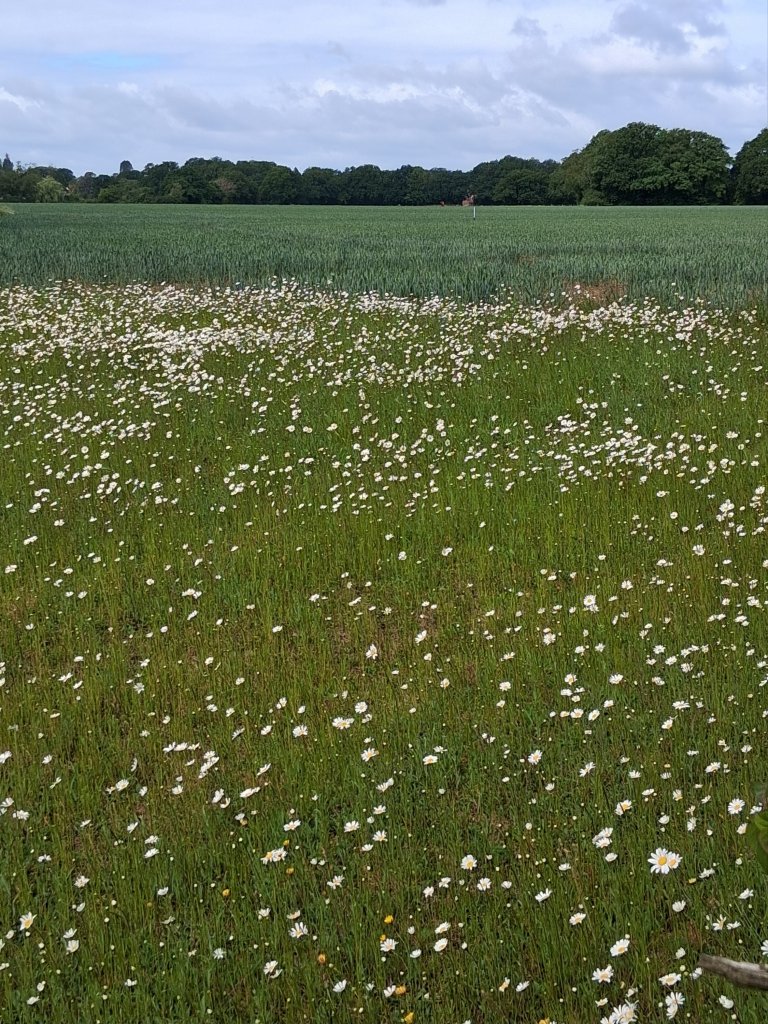
Beauty expresses good

Poem on Substack

Beauty expresses good. We sense it when we see compassion, artisanship and often in nature. By it we judge what leads to life and what leads to death. Beauty informs our being, seen and unseen, and reaches the light within each of us taking us to a place within where we may sense joy and feel content.

Notley John Raye way

Beauty is the place of peace, where we encounter justice and truth reigns. Jesus opens us to this way and leads us to a knowledge of God that transforms our being. His birth life and resurrection shows us a God who enters into creation and faces down evil. On the cross God confronts evil through the narrow way of peace; Jesus experiences death, the consequence of sin, though he never departed from the way of life. Jesus paid the price of Sin, and died. Evil did what only evil could do: violence. Jesus did what only good can do, transformed evil and violence, and defeated it by rising from the dead to new life. Beauty open’s our eyes to resurrection, we are people of the resurrection looking for resurrection in our lives, a people of hope. Through the resurrection hope we receive hope and can look on beauty renewed. We can see.

As we obey the leadings of beauty, beauty opens our eyes to the salvation that is in Jesus the Christ. We come to understand the depths of death, the sin that separates us from life. In peace, humility and contrition we are transformed from glory to glory in the face of evil: all is well and all is made well. We chose life and receive the grace of peace.

Crocheted Jesus

A Poem

From a journal entry of October 2023, written in Wales, I wrote the following deeply thought through statement of where I was at. Two years later I am still moved by the thoughts captured.

Teifi Estuary from road to Poppit

Jesus is more than the figure on the page. Jesus is and was and will be; a flow where the future meets the now and the past is revealed. What’s on the page is a flicker of what was experienced, heard and touched; a taking account of what had been. Jesus on the page reflects the simple men who wrote from their experience of an event that wrenched their hearts. All is love, all is trust in love, love of all and forgiveness. Salvation. A saving from who we are.

Jesus points away from himself. He is the problem. He points to the Father and enjoins us to see only the Father in him. He is but bread, he is simply wine- broken and poured out in a time splitting event. God is revealed in the event of the cross- rent- only a man- rent- son of Mary- rent.

Where does Jesus become real? In the words and recollections, the dogma, the mystical truth that divides? Grace calls us to simplicity. Jesus is the person of God revealed so that we may perfectly know God. Jesus is the incarnate reality that reveals we are all one in God. This union is real, experienced and heals. The attestation is not the person- the stories aren’t the man. The words are not his words. They express an encounter with the divine, an impression of a transfiguring presence. This was the man who revealed deity- not the son of a virgin, not a healer or miracle worker, not a resurrected King but God.

If there is truth in the words, it is because Jesus is already known. He is already there, within, seen and heard.

Beach at Aberaeron

Beauty, truth and justice in work

All of us suffer, and we all toil. Simone Weil points out that a great artist becomes more skilled, a business man becomes more wealthy and a politician gains more power as they succeed in their careers and they move on to greater things. For each a moving on brings wealth and renown on their field.  A worker, a teacher, a farmer, remain in their toil, getting better at it brings no reward, and they can only move on by leaving their trade. For most of us there will be little scope for improvement in our lot unless we change jobs and it may be more of the same as we are subject to redundancy. We may even go backwards.

For most of the world, living from hand to mouth is their lot and we hope that the world will be fair to us and we will have clothes, food, good health and shelter. We also hope for justice, safety and the opportunity to learn.

We learn that this works when our community functions benevolently and that we are part of a community of communities that supports the individual and works towards the collective good.

A supermarket can model this being a placewhere communities intersect. It sells food, clothes and luxuries, and not only thrives at the price point, but succeeds when its staff is content and outward facing and the customers feel part of the whole, believing that all that they have has been produced and provided with kindness. Each of us trusts that no harm has been done and that care is taken so that the weak are provided for. Social capital and loyalty grow if allowed to and the supermarket prospers. It isn’t engineered it is a function of time and place. The store is a modern focus of communities and actually in the common mind held accountable to the common good. This may be a fiction but you see tokens collected for charity, food bank collections and innovations in waste disposal that benefit the locality. Local charities collect at the doors and family and friends gather for coffee. The superstore has become the market centre, which town centres struggle to retain.

Luxury items may be beyond the means of the workers who make them, the meal beyond the purse of the chef, the car beyond the wage of the chauffeur, the lifestyle choice beyond the salesperson.

All the worker can rest in is the the sense of having toiled well, a means to a greater end of having been good and faithful, or avoided penury. If our lot confines our purse but we are necessary to a function of wealth, we can also be happy if we feel part of something beautiful. Our participation brings us joy.

Beautiful things may be of immense value and costly. Refinement and detail has a price and wealth enables great artistry. For most fabricators, the high end taylor, the super car engineer, what they work on is beyond their purse yet without their skill there is no product. That is the nature of our culture; our wage is there because we serve other’s needs. We depend on what we produce. Our labour enriches our customers, our managers as well as ourselves in an organic system fulfilling grades of need. Even people of ideas need others to buy into them and pay.

We are not owned  by others but we sell our labour, peddle our skills, and depend on the market to monetise our efforts. We may shy from calling customers our  masters but in selling our labour we are always close to selling ourselves. By design the beauty that everything we make reflects, cannot be bought and is open to all and can result in wonder or envy.

Simone Weil points to  beauty in the stars, architecture and liturgy, family and holidays. All nature is telling us something, darkness brings light and yes evil hides behind wonder and pretends to be light, but beauty is eternal, envy, jealousy and pride bring death. The consequences of evil persist and their cycle seem unending but as they bring death, if they are not fueled, they too die. Goodness brings their demise sooner.

Further, look at the life cycle of the large blue butterfly, an adult of great beauty whose caterpillar destroys a flower, drops to the ground and depends on tricking red ants into caring for it as a pupa which eventually eats the whole ant colony before becoming a chrysalis and emerging as an adult of great beauty.

Depending on our viewpoint this is horrific as a process or beautiful in its outcome. The butterfly is a parasite, its lifecycle intricate. Beauty depends on your gaze, the truth you hold. The butterfly is indeed beautiful. The lifecycle is in truth fascinating. Seeing the whole covers the detail.

Negotiating the path of life between suffering and plenty demands joy to draw us forward into right seeing. There has to be an eternal covering of all that holds us to the grind stone, envy and jealousy, a stopping and looking to take in the beauty that will remain with us forever. Joy draws us to this and enables us to be content, beholding a beauty all may see, and expand our gaze. We must strive to enable joy to work its alure, I suggest, and lead us along the narrow way that leads to life, to see beauty, truth and good and enjoy life as we are able. The gift I am coming to see is in the moment, the surprise of centering joy. Beauty takes its place on the throne of our hearts and can be shared in the most desperate of circumstances. This beauty is shared by all and binds us together in love. The truth of our way is made plane in love that draws on the ineffable and speaks through kindness and care, compassion and just action. Good times for all.

Ecclesiastes 2:24-26 NRSV

There is nothing better for mortals than to eat and drink, and find enjoyment in their toil. This also, I saw, is from the hand of God; for apart from him who can eat or who can have enjoyment? For to the one who pleases him God gives wisdom and knowledge and joy; but to the sinner he gives the work of gathering and heaping, only to give to one who pleases God. This also is vanity and a chasing after wind.

https://bible.com/bible/2016/ecc.2.24-26.NRSV

The power of beauty, truth and good

Power has at least two ways of working, by force or by persuasion. In the greek, Mark Vernon tells us there are two words (or four) most used for power in the bible, and the one used of Jesus (dunamis) is the power that flows and draws; the power in love, beauty and truth. The other word is the power of authority (exousia), the power of the powers in this earth that exert authority.

I have followed Mark from science cleric to atheist to Buddhist back to mystic Christian. It has always been at a distance, but recently, he has started making more sense.

In this podcast, he ends by critiquing Christianity as falling into the law based authority camp or the camp that grasps at the draw of beauty, the finaty, and finds the eternal. He is drawn to places, to people, and liturgy, that are alluring rather than compel.

Auguries of Innocence

By William Blake

To see a world in a grain of sand
And a heaven in a wild flower,
Hold infinity in the palm of your hand
And eternity in an hour.

https://www.poetryfoundation.org/poems/43650/auguries-of-innocence

Auguries are portends or foretellings so the poem looks at the humanity that reacts to hurt and sees it as pointing forward to innocence or maybe to a restoration of innocence. Compassio then points to an other, draws us to innocence, our reactions to injustice, the caging of the beautiful and hamstringing of the strong point to a purer humanity. They draw us to beauty, truth and good.

Flowers

May

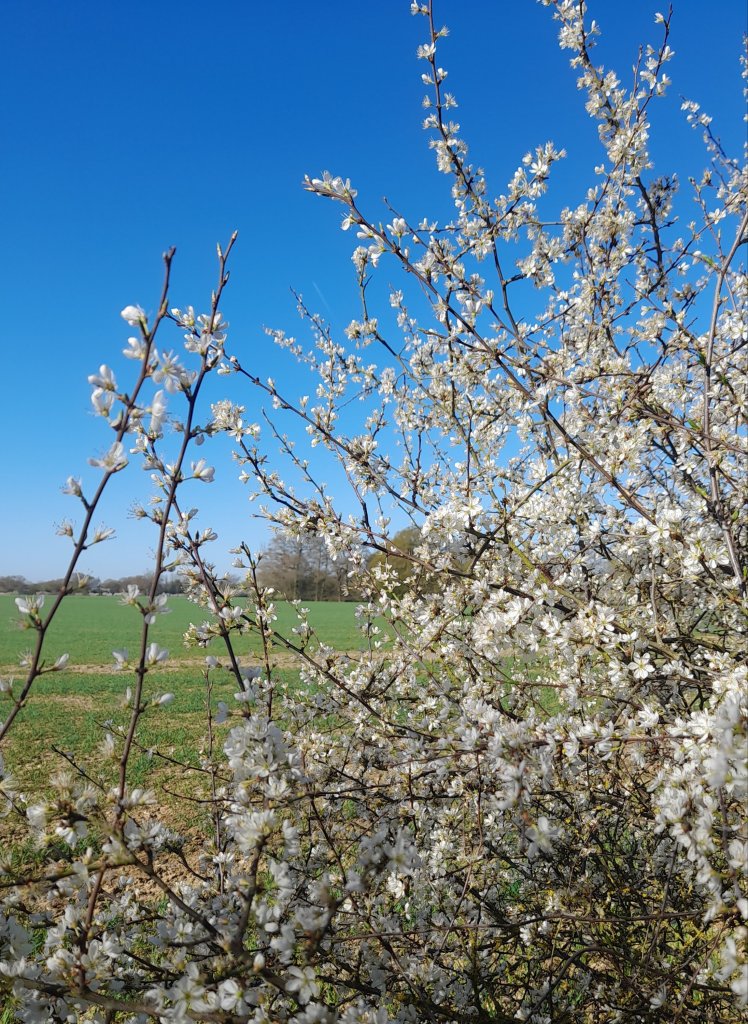
The mornings are getting lighter, and as I write this, we have had some lovely light days. This year, as I walk, I am noticing the flowers more. Isn’t the blossom a welcome sight! The May, the clean white flowers of Blackthorne, are a delight. Look down at the tiny purple violets, the simple yellows of primroses, and the milky banks of cowslips or peggles. We’ve had the snowdrops, and the dafodils and tulips are to come. All in the freshness of new grass; breath in the wholesomeness of freshly cut grass. Trigger warning: hay-fever!
I can find the mornings an anxious time. Jesus says,


John 8:12 NRSV
…, “I am the light of the world. Whoever follows me will never walk in darkness but will have the light of life.”
https://bible.com/bible/2016/jhn.8.12.NRSV

This I find is hard work to meaningfully realise, and I have had to cultivate practices of waiting and prayer, of active noticing, practices of being with people. Phone apps help to ground me: Lectio365, Prayasyougo, and the church of England’s excellent Everyday Faith.

Find people who bring you life, rambling, running, singing, dancing, or learning something new, visiting the community cafe, community gardening, and crafting together.

You might consider sharing a hot beverage with us at the chapel on a Sunday morning at 930am or a bowl of soup on a Wednesday evening at 7pm. Yes, religion will follow, but you don’t have to stay!


Ingrid Goff-Maidoff writes,

God spoke today in flowers,
and I, who was waiting on words,
almost missed the conversation

Jesus, beyond gender.

Humanity is created male and female, the Image of God. Jesus is found in the beginning, the beginning where Wisdom is present, divine companion and creator.

Wisdom is one in the same as Christ, the Creator of all things. Jesus the Christ and Jesus our Wisdom are one: Jesus Christ is Jesus Sophia. Jesus is the incarnation of the Word, there from the beginning, the incarnation of Wisdom.

The incarnation of God is the incarnation of Wisdom that forms, fills and holds the world. This is Jesus, enfleshed in us; like us, the image of God but unlike us being God; calling us to become like God in the humanity we share.

The full counsel of God is found in Jesus dwelling in us, fully God, revealing beauty, justice and mercy. We know joy in one another and weep with the oppressed, called to loving action in the world, in acts of kindness and solidarity.

In all circumstances Jesus’s gift is Peace.

Wisdom is personified as a woman. Jesus is beyond gender yet he is woman incarnate and man, the Father, One in God. Jesus, the Son, is Jesus as Wisdom from the beginning. In his humanity he is a male and in his divinity, beyond male and female: fully woman and fully man yet more.

Just as Love is his essential being so is Wisdom, One with the Father. In Jesus we are formed and sustained. We feed on his milk comforted like new born babes, born into a world of light with strength for the day.

The Son and the Father dwell within us. In him and through him we have our being. As we turn our gaze to beyond the horizon of knowing, we glimpse the fullness of both male and female in him.

In him, we find the beginning of all things. Jesus reveals to us God and in him is both male and female held as one. Jesus is as much woman as man and more.

So how are we to name this? As much as we call Jesus our Christ and Jesus our Saviour, we could know Jesus better as we call on him as Jesus our Wisdom from the beginning, Word made flesh: Jesus Sophia. Peace be with you, go without fear, to love and serve in wisdom.

Healing

God heals. We pray, your will be done on Earth as it is in Heaven. Surely, in the healing of minds and bodies and deliverance from oppression, God is healing. In the mystery of God in all things, upholding all things, God is present in a way that wills only good, that brings light and life.
This is the aroma of God, and we see it in the healing ministry of Jesus who says, if you don’t believe in me, believe in the works that I do. Through community, care, and prayer, followers of Jesus embody this. Followers of Jesus are distinctive only because of love, love of God, and love of those around them.
And so in history we see collections for the poor to feed and clothe them, rescuing of the destitute especially children caringbforbthe sick and teaching, and, as medicine develops, hospitals, and in recent times schools for children.
Visiting the sick and clothing the naked is a work of humanity, as is caring for the indigent and those in prison. Jesus calls us to his perfect humanity, accountable to the light he has placed in everyone. He is light, and we are called to be light. God is not divine deodorant. We are his holy aroma recreated and formed by the renewal of our minds. We are called to be holy as he is holy; to be fully human. Kindness and compassion make us truly human.
The place of gathering for those on this journey, the holy place, is a meal, a table where life is shared in its fullness in all circumstances. A meal that encompasses Jesus in his life, death, and resurrection. The mystery of faith is, being in Christ, being fully human as Jesus was and is, resurrected, making all things new. All creation is in Christ from the beginning, and Jesus reveals this truth, as he is so are we redeeming, redreaming, all things.
This is our religion, our worship, that causes us to sing and praise and to enter the quiet place of intimacy with God. In him, we look with the eyes of Christ and in all see Christ.


God is ever healing, drawing all creation to the good. Miracles happen, but the miracle of the human endeavour is to be celebrated. What we see in medicine today should bring us to our knees in praise and thanksgiving. Medicine in all its forms expresses the miracle of the light within. Humanity expresses itself in healing and curing. Jesus is revealed in our care for the sick and oppressed and in the advances of science. This is the life we are called to. He is not revealed in turning away from the goodness of science to a spiritual desert of disappointment. Does God heal in miraculous ways? Yes, look around you.
People experience the extremes of genetic collateral, physical attrition, and just plain bad luck. All is in God’s hands but is not God’s will. Jesus’s answer is to put in our mouths a prayer that asks for God’s will to be done and in our minds a will to cure.
Does God intervene? Only in love. We are to pray constantly, expressing compassion and kindness for those afflicted and in need of saving. Open your eyes, love wins. Do not be put off by the charlatans who profit from your disappointment. It’s not your fault.

Before Moses died on the borders of the promised land, he said,

‭Deuteronomy 31:26 NRSV‬
“Take this book of the law and put it beside the ark of the covenant of the Lord your God; let it remain there as a witness against you.

He then wrote down a song, and in it, he sung,

Deuteronomy 32:3-6 NRSV‬
For I will proclaim the name of the Lord; ascribe greatness to our God! The Rock, his work is perfect, and all his ways are just. A faithful God, without deceit, just and upright is he; yet his degenerate children have dealt falsely with him, a perverse and crooked generation. Do you thus repay the Lord, O foolish and senseless people? Is not he your father, who created you, who made you and established you?

https://bible.com/bible/2016/deu.32.3-6.NRSV

To Christians, this sounds familiar. Jesus had come down from a mountain where his true glory had been revealed, but in the meantime, his disciples had not been able to cure a fitting boy, and the disciples wanted to know why.

‭Matthew 17:17-18 NRSV‬
Jesus answered, “You faithless and perverse generation, how much longer must I be with you? How much longer must I put up with you? Bring him here to me.” And Jesus rebuked the demon, and it came out of him, and the boy was cured instantly.

https://bible.com/bible/2016/mat.17.17-18.NRSV

https://bible.com/bible/2016/deu.31.26.NRSV

Jesus words seem to say we are at fault when there is no healing, How much longer must I put up with you? I’m not sure this was directed at the hapless disciples.
Jesus has just communed with Moses, who saw how the people had failed and how they would fail despite the law. He had also communed with Elijah, who in the time of Israel’s deep apostasy did many miracles. I feel that Jesus was constantly bringing the people back to Moses; the heritage they were so proud of, what they felt defined them. We see the practices of the way of the law angering Jesus, and here, he reminds them of the prophecy of Moses.
Jesus heals the lad and then teaches the disciples about faith. I believe he was drawing a contrast, reframing the song of Moses, anticipating an end to the curse of the law and healing the lad. I think Jesus words and healing were a parable; the disciples would see Jesus recalling the song of Moses and speaking out frustration at the way of the Law, then there was healing, then joy, a new way that always was the way, a revelation of the true way..
Afterwards, the disciples wanted to know why they were not able to deliver the boy; their expectation must have been that they could, but nothing happened. Had they not healed people and raised people from the dead?

‭Matthew 17:20 NRSV‬
He said to them, “Because of your little faith. For truly I tell you, if you have faith the size of a mustard seed, you will say to this mountain, ‘Move from here to there,’ and it will move; and nothing will be impossible for you.”

https://bible.com/bible/2016/mat.17.20.NRSV

Does this mean their lack of effectiveness was their own fault? What was the lesson? Your faith is less than tiny, but tiny faith can alter stuff. You can read this all as a rebuke or as playful teaching. It was the demon that was rebuked, not the disciples.
The whole incident is redolent with hyperbole. otherwise, he would be denying his own faith. We learn there were occasions Jesus himself was unable to heal.
We have been taught to feel bad about our lack of faith, but Jesus is telling us we don’t need much and encouraging us, not telling us off. Read it again, seeing Jesus after coming down from the mountain, and overjoyed that life was coming, acting out the song of Moses, then healing with a huge smile on his face. Keep coming to Jesus and asking.


Does suffering cease? Only through love, and if our tiny faith does not prevail, we can trust in that love and draw on it, as Jesus stands with us in our anguish. We bear in plastic shopping bags a fullness beyond measure, and yet death and destruction stalk our daily lives and evil picks off the innocent. I hope Jesus is frustrated with that, and we see that he is. I am.

We are to seek the good of all in our actions and in our prayers. This is our work. A prayer for healing is an act of love. We can not be other than fully human in our spirituality. Sometimes, our prayer is a groan, and in this groan, the Spirit knows deeper than we can know what to pray. Every prayer drives the cosmos forward in Christ. We need to realise the power of Christ in us, the light we bear and shine out.
Our hope is that all is in God’s hands. We are taught that hope is not what is seen. Hope, faith and love are our virtues; a growing faith that breaks through the wall of transactional childish ways into a deep trust; a real hope which prays with all our humanity, sure that God is love.
Do not become slaves to events, people, and places but worship in spirit and truth. Do not be those who naval gaze, but become those who act to bring unrelenting good into this held but broken creation.
My dream is that we will break through to a place where we don’t hold God to account for not healing: a place where we can integrate all creaturly experience as being held in Christ.
It is good to ask the question and wrestle with it, but don’t give up praying and meeting together, losing hope. God is healing, and our prayers are effective: God is sovereign in and through love and only in and through love. Love is difficult. All creation, the good and the bad, is perfected in love. Wrestle. Imagine. Dream. We should see more healing, and it is frustrating, but don’t give up or concede a vision of a good and powerful God.

My hope is that we will share spiritual practices that deepen the life of service and maybe take a few up. But I think they are best done together and voluntarily. I think they then feed the multiple personalities and dispositions of the gathered who can choose what to do in their daily life. Only do not then leave the table.
To be authentic, the body of believers minister Christ to those around them in eating together, walking together, and listening. We model a non transactional way where people come and do life together because they are being met by Christ. We resist framing people’s experience of God and killing it with practices.
It is enough that they want to be there. Church is voluntary, and leadership in the body is in teaching, facilitating and guiding; providing the fuel. There is also judgement, routing out hypocrisy and exposing harm, which Jesus shows is directed towards the powerful and is uncontroling.


There is a life worth living, and it first draws us inward to the secret place, and we are cleansed. We become in our lives faithful to Jesus, the one who lived died and rose again, revealing God as Father, Son, and Spirit: Christ for all. In this life God is healing.

The silence of the teacher.

God appears silent, distant, disengaged. Our hope is he is really there. The fact that we even consider him is because we believe  we have experienced him, not in our reason alone, but in his felt presence. We may have been told about him, but unless we have encountered him, he is not there.

As a friend, it would be a deception to try to persuade you; truth, beauty, and justice are everywhere, but so is ugliness, suffering, and despair. In fact, the goodness that is creation is concealed by death. Every particle operates to preserve itself, and even life itself is selfish. The vastness of space, though awesome, appears empty and threatening, and life is cruel. Yes, at the heart of trying to know, there is falsehood and deception in ourselves that leads us from seeing things as they are. Can we ever know we have encountered God?

For God to be true and good, he, in his very essence, must be uncoersive love, not insisting on his own way and a fountain of forgiveness. How else are we to be saved, except if God is not steadfast in love, ever drawing us to himself? Truly, he speaks out creation in chaos, and the sound of his voice is sheer silence. He speaks out new creation in the chaos of our lives, and we only know this because we love as he loves us. We love as our hearts teach us to love.

As a teacher, I am careful not to leap in with the answer when a pupil has a problem. I hope they will look again and, if I do well, I guide them to see their own solution. Sometimes, I try to figure it out with them, not taking the lead.

When I don’t give an answer, they may get frustrated and may even doubt whether I can solve the problem. My silence is intended to spur them on to solve it for themselves.

It’s a matter of growth. When they were new to the task, they needed help, but they need to get beyond my help. To progress, they must engage and trust themselves, disrupting what they already know. My silence is necessary if they are to progress and move further than I can lead.

God is ever present, ever knowing and anticipating our every breath, holding us. We can be reassured that we are held. Moment by moment, he is pouring out self giving love.

Love empowers us to be true to God, trusting that even in his silence, he is guiding us so that we are freed to do his will. Daily, we set our plans before him, seeking to obey his command to love. His presence, known or unknown, enables us to walk in truth, beauty, and justice, and we grow to recognise his voice in all things. Truly, we become like him.

Our goal is to walk with him, unhindered and unfettered. In this veil of death, the promise is beyond the horizon, and everything senses its draw, groaning for it to be revealed. It’s a call back to the garden of Eden, a paradise lost. From the Chaos of our first parents’ sin in a creation made very good, our present creation is formed in death. This is not a point in time but in a reality formed in anticipation; we are in an altered state of being, which from the beginning knew the lamb that was slain yet was very good. And so, out of the very real loss of paradise, all creation carries the mark of death. Eden is beyond myth, it is the mystery revealed on the cross of Christ that drives us to the consumation of all things in the fact of the risen Christ, now and forever in the coming new creation when heaven joins earth once more in our resurection in him.

‭John 15:13-17 NRSV‬
No one has greater love than this, to lay down one’s life for one’s friends.

You are my friends if you do what I command you. I do not call you servants any longer, because the servant does not know what the master is doing; but I have called you friends, because I have made known to you everything that I have heard from my Father.

You did not choose me but I chose you. And I appointed you to go and bear fruit, fruit that will last, so that the Father will give you whatever you ask him in my name.

I am giving you these commands so that you may love one another.

https://bible.com/bible/2016/jhn.15.13-17.NRSV

Of relics, intersex genetics, and transgender identity

Or do you not know that your body is a temple of the Holy Spirit within you, which you have from God, and that you are not your own? For you were bought with a price; therefore glorify God in your body.
1 Corinthians 6:19‭-‬20 NRSV

https://bible.com/bible/2016/1co.6.19-20.NRSV

Are trans people ‘on a sacred journey’?

The bodies we have, I believe constitue ourselves, our lives. They are not just animated containers. The scripture above would speak to followers of Jesus about how their conduct in their bodies matters. Being a follower of Jesus is more than doing no harm to others it includes doing no harm to our selves. There is no body spirit divide and in harming ourselves we harm the sacred other. So what does this mean if you suffer body dysphoria; what if the body you have causes you pain because it does not match the gender your brain is telling you you are? Biology has got it wrong.

I want to approach this through relics and the facts of science, to establish the sanctity of material and of life, the twists of religion and the twists of genetics.

Relics are material remains of the life of a person. They can be body parts. When they are body parts or even whole bodies, I sense within myself an offence at their veneration. Something deeply human, to honour the dead, has been overcome for the sake of religion, parading their remains. Or has it? The sanctity of a person residing in their material being is a deeply human reaction; we honour bodies and ashes. An unburied body is an offence. We visit graves and, some sense the presence of a person at a grave side. Personally I am overcome at the graveside of my sister. Maybe to offer people the experience of the presence of a person through relics is acceptable. I am not convinced but am prepared to accept it is a human reaction to the same feeling I get on being at the grave.

The relics of Christ would be his clothes, his blood and the water that streamed from his side, elements of the cross and his burial cloths but the Bible speaks nowhere of these being collected to be venerated or admits such a practice. But there is a human  instinct to invest the material remains with the essence of the deceased. Photographs, pew seat covers, vestry brooms all have significance and if they belonged to a holy person, well…

Jesus is recorded as emotional, he ate and sweated and was physically mature.

In the words of the notorious Ezra Pound,

Oh we drank his “Hale” in the good red wine
When we last made company,
No capon priest was the Goodly Fere
But a man o’ men was he.

Ballad of the Goodly Fere

Ezra Pound – 1885-1972

In all ways Christ identified with humanity, even in death. In death the material of his body remained to be resurrected, the first fruits of a new materiality, fully human but glorified, a new creation subsuming the old, the old creation wholly the new, is how I see it. So in his death and resurrection, for me, Christ reveals the mystery of all creation, the sacredness of all matter. We breath the air Christ breathed. His dead body was not just a skeleton, flesh and fluids it was the person of God, incarnate and dead. This for me is the holiness of Easter Saturday.

Paul teaches that identifying with Christ involves a physical infilling of the Spirit, an earnest of our future resurrection so that we are a new creation. He pictures our bodies as a temple of the Spirit, bringing what was to be into what is now, endowing us with the new materiality of the resurrected Christ. Part of our experience of life is the putting off of the old body and the putting on of the new.

All bodies are imperfect and subject to chance and time. No doubt some bodies are formed through choices made or marred by self harm or collateral damage. None are beyond redemption.

The number of people born intersex is between 0.02% and 0.05% and arguably 1.7%. Let’s take the low percentage of 0.02%. Today there were potentially 385,000 babies born today, so there were potentially 100 intersex babies. About 0.1% of babies are born with Downs syndrome, another chromosomal variation, so about 600 could have been born today. Every 3 seconds someone is said to be diagnosed with dimentia around the world. Each is a person. Each made in the image of God. As a Christian, the sanctity of life is important, and mercy killing, abortion and end of life occupy a sacred space.

The poet David Hodges, a Cistercian Monk taking the voice of a lady, identifying with a feminist agenda, writes,

If it’s a mistake
it has no rights,
let it die
don’t incubate it.
Stick it in
a plastic bucket,
it’s not human
if I don’t want it.

From Protect the Human in Watching for the Wind by David Hodges

I don’t like this poem, but the phrase, it’s not human if I don’t want it, is haughnting. My reaction to thus phrase confirms flesh is sacred to me; having choice doesn’t change the fact that a life has been lost and instinctively I feel the flesh should be honoured. My baby brother died very early in life and the practices of the times means he has no grave, yet he is memorialised in our family. I feel deeply that no life should be extinguished because it is less than perfect and all flesh that housed human life has dignity.

Medicine is allowing us to preserve life outside the womb earlier and earlier and share organs. Hopefully this is not leading to a brave new world where the womb is dispensed with; every intervention carries a risk of misuse. Organs can be harvested and bought. But, for now, it’s a true observation that we dispense with life and are controlling its coming into being in what seems to be an irrational way in the name of rationality.

So God created humankind in his image, in the image of God he created them; male and female he created them.
Genesis 1:27 NRSV

https://bible.com/bible/2016/gen.1.27.NRSV

As many of you as were baptized into Christ have clothed yourselves with Christ. There is no longer Jew or Greek, there is no longer slave or free, there is no longer male and female; for all of you are one in Christ Jesus.
Galatians 3:27‭-‬28 NRSV

https://bible.com/bible/2016/gal.3.27-28.NRSV

It’s only humanity that is so specified as being male and female in Genesis. Some fish swap gender as do worms, slugs and snails. Male bees, wasps and ants develop from the unfertilised eggs of females enabling the female genes to perpetuate.

I have written elsewhere of the miracle that is Jesus, formed from the flesh of Mary yet fully human. A harmonising of the Genesis story admits that humanity was formed male and female and became man and woman. The Fall story illuminates the consequence of division and Paul shows how Jesus restores peace. I personally can’t see how the writer of Genesis had gender politics in mind. I do see however that in God male and female coexist. God is beyond gender. Jesus’ humanity is beyond genetics.

To use Genesis in the debate on transgender identity does violence to its writing. Paul writes,

All scripture is inspired by God and is useful for teaching, for reproof, for correction, and for training in righteousness, so that everyone who belongs to God may be proficient, equipped for every good work.
2 Timothy 3:16‭-‬17 NRSV

https://bible.com/bible/2016/2ti.3.16-17.NRSV

What is the reproof, the correction, the training for righteousness in Genesis 1 and 2? It certainly is a challenge to the patriarchal culture of the day and so it seems for today. I believe in the plain reading of what it says and who Jesus is. All humanity is made in the image of God, however formed. Isn’t the story of the Fall an indictment of binary thinking, the knowledge of good and evil being the foundation of sin. Jesus commands us not to judge with the authority of Genesis. 

“Do not judge, so that you may not be judged. For with the judgment you make you will be judged, and the measure you give will be the measure you get. Why do you see the speck in your neighbor’s eye, but do not notice the log in your own eye? Or how can you say to your neighbor, ‘Let me take the speck out of your eye,’ while the log is in your own eye? You hypocrite, first take the log out of your own eye, and then you will see clearly to take the speck out of your neighbor’s eye.
Matthew 7:1‭-‬5 NRSV

https://bible.com/bible/2016/mat.7.1-5.NRSV

In the transgender debate this is for me a key scripture along with 1 Corinthians 6 . Jesus calls us to a high standard of righteousness; he takes the high ground in all disputes on the law from divorce to property. It is strange how we in the name of grace cheapen Jesus’ words. Jesus  commands us to Love and not judge and calls us to a purity that would cut off our hands and rip out our eyes rather than lust, would cast ourselves into the sea with a weight round our neck rather than abuse a child.

We really have lost it when our only care is the integrity of our liturgy, the preservation of our hierarchy and power. Jesus calls us to a higher righteousness. Transgender people suffer because they feel their biology has let them down. They have a genetic mismatch in their minds.

Our only response to one another as Christians who follow Jesus must be to be with those who find blessing in the midst of destitution and hunger and thirst for the righteousness that does not judge and loves to the point of loving its enemies.

Currently we are sullying the message of the Jesus by engaging in the politics of transgender identity rather than acknowledging the sacred journey we are all on from brokenness to wholeness, immersed in the rule of God. Nobody I hope is advocating that we are called to anything less than love, anything less than humility, anything less than faithfulness: Jesus is our righteousness, and we are saved by his faithfulness.

Are we really saying that someone who is LGBTQ+ is less worthy than any of us; or anyone who is not male or female, or suffers from gender dysphoria, or has a mental disability or dimentia. Read Matthew 7 again and pray with me for God’s mercy; it’s so much more complex.

The relics of St Theres of Lissieux are seen as an ikon to a knowledge of Christ. I don’t agree and something in me cries out against such a theology. At a tender age Theres felt called to be a nun and as a nun she felt called to be a missionary. She suffered deeply physically and mentally and at one stage maybe lost her faith. However she saw in her suffering a way to heaven from where she would shower petals of love on all. She died very young. The little way she left has encouraged many to  faith in Christ. Her words are her true relic. Her youthful wilfulness and dogged self identifying as a nun, who would never marry, was decided by her at the age of 15.

Mary, we believe, could have been 14 when she conceived Jesus. Her willingness to accept the word of the angel brought Christ into the world. This is not normal. Theres was not normal.

We should be very wary of excluding or dismissing what we see to be not normal. We are called to compassion,  to be a source of hope and light. To wade into the argument on transgender therapy with scripture is not necessary. We should keep our arguments in the sphere of protecting the weak and vulnerable. If we exclude the weak and vulnerable our voice is not Christian.

When the woman caught in adultery was brought to Jesus, he again took the high ground as regards the law. However, in executing his judgement, we only see mercy. Jesus states that though she had transgressed, he did not condemn her. He let’s her depart with the word, not to sin again. He entrust her with a high calling. Let us go and do likewise.

https://www.thetech.org/ask-a-geneticist/transgender-intersex-sex-chromosomes

https://www.littleflower.org.uk/her-life-in-lisieux-carmel