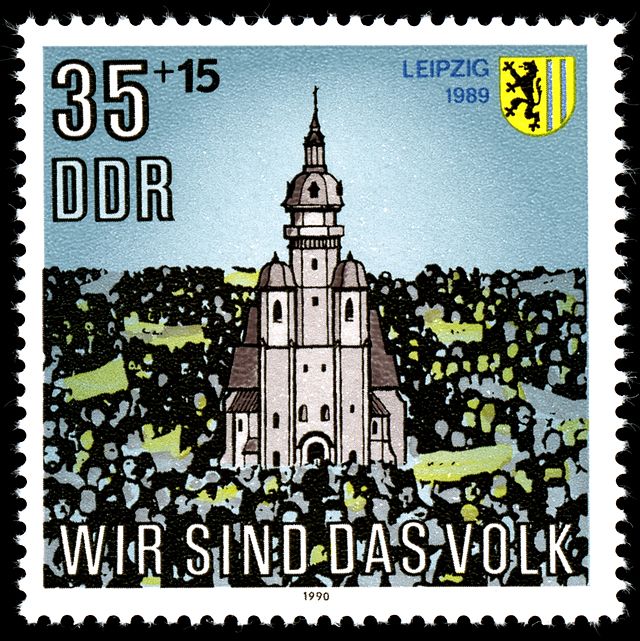
Take a look at this post… ‘Swallow’.
Leave a reply

Or do you not know that your body is a temple of the Holy Spirit within you, which you have from God, and that you are not your own? For you were bought with a price; therefore glorify God in your body.
1 Corinthians 6:19-20 NRSV
https://bible.com/bible/2016/1co.6.19-20.NRSV
Are trans people ‘on a sacred journey’?
The bodies we have, I believe constitue ourselves, our lives. They are not just animated containers. The scripture above would speak to followers of Jesus about how their conduct in their bodies matters. Being a follower of Jesus is more than doing no harm to others it includes doing no harm to our selves. There is no body spirit divide and in harming ourselves we harm the sacred other. So what does this mean if you suffer body dysphoria; what if the body you have causes you pain because it does not match the gender your brain is telling you you are? Biology has got it wrong.
I want to approach this through relics and the facts of science, to establish the sanctity of material and of life, the twists of religion and the twists of genetics.
Relics are material remains of the life of a person. They can be body parts. When they are body parts or even whole bodies, I sense within myself an offence at their veneration. Something deeply human, to honour the dead, has been overcome for the sake of religion, parading their remains. Or has it? The sanctity of a person residing in their material being is a deeply human reaction; we honour bodies and ashes. An unburied body is an offence. We visit graves and, some sense the presence of a person at a grave side. Personally I am overcome at the graveside of my sister. Maybe to offer people the experience of the presence of a person through relics is acceptable. I am not convinced but am prepared to accept it is a human reaction to the same feeling I get on being at the grave.
The relics of Christ would be his clothes, his blood and the water that streamed from his side, elements of the cross and his burial cloths but the Bible speaks nowhere of these being collected to be venerated or admits such a practice. But there is a human instinct to invest the material remains with the essence of the deceased. Photographs, pew seat covers, vestry brooms all have significance and if they belonged to a holy person, well…
Jesus is recorded as emotional, he ate and sweated and was physically mature.
In the words of the notorious Ezra Pound,
Oh we drank his “Hale” in the good red wine
Ballad of the Goodly Fere
When we last made company,
No capon priest was the Goodly Fere
But a man o’ men was he.
Ezra Pound – 1885-1972
In all ways Christ identified with humanity, even in death. In death the material of his body remained to be resurrected, the first fruits of a new materiality, fully human but glorified, a new creation subsuming the old, the old creation wholly the new, is how I see it. So in his death and resurrection, for me, Christ reveals the mystery of all creation, the sacredness of all matter. We breath the air Christ breathed. His dead body was not just a skeleton, flesh and fluids it was the person of God, incarnate and dead. This for me is the holiness of Easter Saturday.
Paul teaches that identifying with Christ involves a physical infilling of the Spirit, an earnest of our future resurrection so that we are a new creation. He pictures our bodies as a temple of the Spirit, bringing what was to be into what is now, endowing us with the new materiality of the resurrected Christ. Part of our experience of life is the putting off of the old body and the putting on of the new.
All bodies are imperfect and subject to chance and time. No doubt some bodies are formed through choices made or marred by self harm or collateral damage. None are beyond redemption.
The number of people born intersex is between 0.02% and 0.05% and arguably 1.7%. Let’s take the low percentage of 0.02%. Today there were potentially 385,000 babies born today, so there were potentially 100 intersex babies. About 0.1% of babies are born with Downs syndrome, another chromosomal variation, so about 600 could have been born today. Every 3 seconds someone is said to be diagnosed with dimentia around the world. Each is a person. Each made in the image of God. As a Christian, the sanctity of life is important, and mercy killing, abortion and end of life occupy a sacred space.
The poet David Hodges, a Cistercian Monk taking the voice of a lady, identifying with a feminist agenda, writes,
If it’s a mistake
From Protect the Human in Watching for the Wind by David Hodges
it has no rights,
let it die
don’t incubate it.
Stick it in
a plastic bucket,
it’s not human
if I don’t want it.
I don’t like this poem, but the phrase, it’s not human if I don’t want it, is haughnting. My reaction to thus phrase confirms flesh is sacred to me; having choice doesn’t change the fact that a life has been lost and instinctively I feel the flesh should be honoured. My baby brother died very early in life and the practices of the times means he has no grave, yet he is memorialised in our family. I feel deeply that no life should be extinguished because it is less than perfect and all flesh that housed human life has dignity.
Medicine is allowing us to preserve life outside the womb earlier and earlier and share organs. Hopefully this is not leading to a brave new world where the womb is dispensed with; every intervention carries a risk of misuse. Organs can be harvested and bought. But, for now, it’s a true observation that we dispense with life and are controlling its coming into being in what seems to be an irrational way in the name of rationality.
So God created humankind in his image, in the image of God he created them; male and female he created them.
Genesis 1:27 NRSV
https://bible.com/bible/2016/gen.1.27.NRSV
As many of you as were baptized into Christ have clothed yourselves with Christ. There is no longer Jew or Greek, there is no longer slave or free, there is no longer male and female; for all of you are one in Christ Jesus.
Galatians 3:27-28 NRSV
It’s only humanity that is so specified as being male and female in Genesis. Some fish swap gender as do worms, slugs and snails. Male bees, wasps and ants develop from the unfertilised eggs of females enabling the female genes to perpetuate.
I have written elsewhere of the miracle that is Jesus, formed from the flesh of Mary yet fully human. A harmonising of the Genesis story admits that humanity was formed male and female and became man and woman. The Fall story illuminates the consequence of division and Paul shows how Jesus restores peace. I personally can’t see how the writer of Genesis had gender politics in mind. I do see however that in God male and female coexist. God is beyond gender. Jesus’ humanity is beyond genetics.
To use Genesis in the debate on transgender identity does violence to its writing. Paul writes,
All scripture is inspired by God and is useful for teaching, for reproof, for correction, and for training in righteousness, so that everyone who belongs to God may be proficient, equipped for every good work.
2 Timothy 3:16-17 NRSV
https://bible.com/bible/2016/2ti.3.16-17.NRSV
What is the reproof, the correction, the training for righteousness in Genesis 1 and 2? It certainly is a challenge to the patriarchal culture of the day and so it seems for today. I believe in the plain reading of what it says and who Jesus is. All humanity is made in the image of God, however formed. Isn’t the story of the Fall an indictment of binary thinking, the knowledge of good and evil being the foundation of sin. Jesus commands us not to judge with the authority of Genesis.
“Do not judge, so that you may not be judged. For with the judgment you make you will be judged, and the measure you give will be the measure you get. Why do you see the speck in your neighbor’s eye, but do not notice the log in your own eye? Or how can you say to your neighbor, ‘Let me take the speck out of your eye,’ while the log is in your own eye? You hypocrite, first take the log out of your own eye, and then you will see clearly to take the speck out of your neighbor’s eye.
Matthew 7:1-5 NRSV
https://bible.com/bible/2016/mat.7.1-5.NRSV
In the transgender debate this is for me a key scripture along with 1 Corinthians 6 . Jesus calls us to a high standard of righteousness; he takes the high ground in all disputes on the law from divorce to property. It is strange how we in the name of grace cheapen Jesus’ words. Jesus commands us to Love and not judge and calls us to a purity that would cut off our hands and rip out our eyes rather than lust, would cast ourselves into the sea with a weight round our neck rather than abuse a child.
We really have lost it when our only care is the integrity of our liturgy, the preservation of our hierarchy and power. Jesus calls us to a higher righteousness. Transgender people suffer because they feel their biology has let them down. They have a genetic mismatch in their minds.
Our only response to one another as Christians who follow Jesus must be to be with those who find blessing in the midst of destitution and hunger and thirst for the righteousness that does not judge and loves to the point of loving its enemies.
Currently we are sullying the message of the Jesus by engaging in the politics of transgender identity rather than acknowledging the sacred journey we are all on from brokenness to wholeness, immersed in the rule of God. Nobody I hope is advocating that we are called to anything less than love, anything less than humility, anything less than faithfulness: Jesus is our righteousness, and we are saved by his faithfulness.
Are we really saying that someone who is LGBTQ+ is less worthy than any of us; or anyone who is not male or female, or suffers from gender dysphoria, or has a mental disability or dimentia. Read Matthew 7 again and pray with me for God’s mercy; it’s so much more complex.
The relics of St Theres of Lissieux are seen as an ikon to a knowledge of Christ. I don’t agree and something in me cries out against such a theology. At a tender age Theres felt called to be a nun and as a nun she felt called to be a missionary. She suffered deeply physically and mentally and at one stage maybe lost her faith. However she saw in her suffering a way to heaven from where she would shower petals of love on all. She died very young. The little way she left has encouraged many to faith in Christ. Her words are her true relic. Her youthful wilfulness and dogged self identifying as a nun, who would never marry, was decided by her at the age of 15.
Mary, we believe, could have been 14 when she conceived Jesus. Her willingness to accept the word of the angel brought Christ into the world. This is not normal. Theres was not normal.
We should be very wary of excluding or dismissing what we see to be not normal. We are called to compassion, to be a source of hope and light. To wade into the argument on transgender therapy with scripture is not necessary. We should keep our arguments in the sphere of protecting the weak and vulnerable. If we exclude the weak and vulnerable our voice is not Christian.
When the woman caught in adultery was brought to Jesus, he again took the high ground as regards the law. However, in executing his judgement, we only see mercy. Jesus states that though she had transgressed, he did not condemn her. He let’s her depart with the word, not to sin again. He entrust her with a high calling. Let us go and do likewise.
https://www.thetech.org/ask-a-geneticist/transgender-intersex-sex-chromosomes
I knew David as a childhood friend. I was involved with Datblygu before they were famous.
David was an intense friend given to extremes. We were both leftist and exchanged youthful ideas about how the world should be. He was younger than me but we shared ideas and that was it. He was an unpredictable and reclusive friend, given to extremes, some of which were troubling and cruel but be was kind.

While I was at University in Bristol, my taste in music veered towards punk and radical, so when I came home for the summer I reconnected with David.
I was encouraged by David’s kind and gentle Dad who always found time for me. By this time David was doing his A levels. David was smoking and drinking and indulging a developing addictive personality. He had a Tascam mixer and was producing cassette tapes. I was impressed and started spending time with him sharing our taste for John Peel.
His mother was encouraging. I got the impression his parents were hoping my friendship would be positive. We discussed God and vegetarianism. I am not sure David’s wounderful mum understood what he was getting into and was the normal indulgent mam.
By the time I had graduated and was embarking on doing my PGCE in Cardiff, David was functioning with alcohol and trying drugs. I realised this while at a concert in St Dogmaels where the likes of Edgar Allen Poet and Malcolm Neon played. David was unreasonably angry and drunk. It was a different David.
Malcolm was an inspiration and we spent time in his makeshift studio in his bedroom where he tortuosly mixed synthetic sounds frequently interfered with by the local Taxi firm behind his house with their short wave radios. He was a perfectionist and ahead of his time.

I was worried by his behaviour but David’s creativity was astonishing and there was a buzz in Cardigan where every rebel had an idea. I am not sure this was good though layerd over a cultural void.
David was able to make his guitar say anything; it was an extension of his voice. We discussed deep things and spent the summer at the nascent Fflach studious in the derelict basement of a Chapel on the Mwldan, trying to produce a tape for BBC Cymru, who seemed to be very antagonistic and not understanding of what was going on.

David produced a magazine called Mae’na Dân Yma Beth Bynnag. He only produced one but managed to convince the BBC it was significant. During the summer I met Pat and she sung on a made up band we got together as a laugh called Mah Blah but never performed only recorded as a way of experimenting in the studio. It was named because every rubbish Welsh rock Group in David’s analysis had the sound “mah” in their name.
We did a song about born again Pharisees, Prophets that profited, called Paid Cynllwyno Fy Marwolaith, and a lament on Bhopal. We also wrote a play for a BBC competition called Pan Mae’r Lleuad yn Llyfo a mad attack on organised religion including a very violent murder based around a full moon. We didn’t win.

David became a sparring partner as my religious sensibilities were growing. Me being a Catholic, he quizzed me finding the life sized wooden carving of the crucified Christ outside the Catholic Church a troubling image, having to go past it each morning and evening to get to and from school. I remember one evening of deep discussion when we spent time at Pat’s cottage overlooking Bala lake, I think, where I struggled to present a coherent cosmology, but failed. The cross is an image David found perplexing, appearing in some of his lyrics as something that was failing him.
David seemed desperate to include me but I was abstemeous, averse to drugs and dogidly Christian. David asked me to come with them to the Eisteddfod to perform in the alternative scene organised by Anhrefn. I agreed. I had been on a Jesuit Silent retreat in Loyola Hall Liverpool and been confronted with the hate in my heart and the cruelty of the world. I was in a mess emerging from a devastating experience of University which left my self esteem in pieces. I also knew and found out how antagonistic Anhrefn were to Christianity. The Christians picketed one of the venues we played at which I found disconcerting. But again I was challenged as I found myself understanding both sides of the argument; being an un- invested outsider I could see contradictions in Welsh culture and its investment in a failing faith.
David and Pat were lovely people and so kind. I had agreed to go but I didn’t last. I played 3 times, once without an audience, once in a pub where someone threw a telephone at us and once where we silenced an audience for the BBC in a tent.
People came up to us afterwards and were incredibly complementary. I think they had seen something new they did not expect of Welsh music. I was terrified as the fact that I was second language Welsh and very shy, was exposing me: an imposter. The song I played on was Dafydd Iwan yn a Glaw which wasn’t making us popular. However I became so frightened of the drugs and alcohol I decided to leave, got on a train and went miserably home. All I earned was a mention on the Anhrefn album Cam o’r Tywyllwch as a friend which was removed it seems subsequently. My next stop was Corymela where in the Croi I shed my republican opinions.
David became a stranger to me. When I did occasionally meet him, he was clearly sad. I couldn’t cope not knowing how to reach him. I found the recent videos of him and some of the songs he wrote very sad though incredibly poetic. Pat as ever though was a delight and clearly loved and valued him.
That was the end for me and I have been in England ever since, reflecting occasionally on this cathartic experience. Strangely I became part of a church that turned its back on modern culture, and the media, and though I had been an avid Peel listener and Fall fan with David, I have only recently found out about the extent of Datblygu’s fame and David’s influence.
Why am I writing now? I have to confess to being an unreliable witness and doubt my memories. Cool Cymru passed me by but even now when I look at interviews I see chronic self indulgence and deep immaturity. Alcohol and drugs have a dangerous grip on the Welsh youth psychi. It was ever so.
Indulgent mams have a lot to answer for as do emotionally absent fathers, though this wasn’t the case for Mr Edwards.
Hedonism is the perennial religion. Being foul mouthed is a badge of honour and cursing a deeply ingrained part of the language. In my time girls were dishonoured and treated as objects and racism was casual.
There was a deeply ingrained nepotistic caste system perpetuated by ruinous language streaming in the schools.
The Welsh Not might be a folk tragedy but there was no sympathy for the sons and daughters of the crime. My father was the son of a miner from Birmingham who followed the work aged 14 and learned the Welsh of the coal face. He married my Mamgu, daughter of Welsh peasant stock. In his late teens my dad converted to Catholicism and was to be an advocate for the Welsh language in the church all his life.
I came to Wales aged 7 and was a learner the rest of my days. Menna Elfyn was my teacher and was such a good, inspiring teacher, but despite her efforts I was never accepted as a Welsh speaker. But I gained a trophy for my efforts and was allowed to compete in Eisteddfodau.

Cardigan was a fragmented town divided by Chapel affiliation; the remnant seafaring community moved from the Netpool to the Ridgeway, a virtual ghetto with its own distinguishing accent; the mainly English employees of the RAE in Aberporth, and run by a Masonic Lodge. There were running cultural sores and David tried to create an audience in this milieu… a doomed enterprise.
The truth is you need an income or parents able to support you. Pat was a Chemist, I think, and David had parents who would drive to the ends of the earth for him. But where was the audience to come from, especially as David seemed to despise the people who might pay his way and was continually biting the hand that fed him. Mark Smith was not a good role model.
But when I knew the boy David, he wasn’t only able write Fy Dy and Cariad yn y Rhewlgell but y Teimlad. This is engaging poetry in Welsh and tanslates well to English, played on a Catgut, half sized guitar and recorded on a fourtrack recorder in a bedroom. David despised clean sounds, once, when we did a song, he said it sounded too good and trashed it.
Outside Cardigan the cultural problems were magnified. David hated the Welsh music industry and attacked it and his audiences with explosive ire. We are talking wrath. Did this energy consume him?
One incident that stands out, because of the documentary I saw on S4C, where they played out with Geraint Jarman’s song, Merch Ty Cyngor happened that eventful summer in North Wales.
David insisted on taking me to a Geraint Jarman concert and spent the whole concert standing in the middle of the dance floor, smooth faced, huge in his trench coat, hurling abuse at the stage. A hairy large man tried to reason with him. David smiled and carried on expecting me to join in!
Was this song sung on the documentary played as evidence of a reconciliation with the industry? I don’t think so, it sounds like irony, missed by S4C. What I saw on the documentary was a burnt out man with a boyish smile struggling with the fact that he couldn’t quite be the Fall… Thank God for John Peel. For me David is the boy who wrote y Teimlad. This wasn’t a love song, it was a reaching out for meaning, a grasping for a sparkling chink of light.
Y teimlad sy’n gyrru bobol i anghofio amser
Y teimlad sy’n gyrru ti i feddwl nad yw’r dyfodol mor fler
Y teimlad sydd yn dod a cyn sbarduno gobaith
Ti’n gweld y tywod llwch ond ti’n gweld fod yno flodau
Y teimlad, beth yw’r teimlad?
Y teimlad sydd heb esboniad
Y teimlad, beth yw’r teimlad?
Y teimlad sy’n cael ei alw’n gariad
Cariad, cariad, y teimlad
Mae hapusrwydd yn codi ac yn troi yn wir rhywbryd
Ac mae’n dangos fod yno rhywbeth mewn hyd yn oed dim byd
A pan mae’r teimlad yno mae bywyd yn werth parhau
Ond yn ei absenoldeb mae’r diweddglo yn agosau
Y teimlad, beth yw y teimlad?
Y teimlad, sydd heb esboniad?
Y teimlad, beth yw y teimlad?
Y teimlad, sy’n cael ei alw’n gariad

The Christian distinctive that is foundational.
Miroslav Volf teaches at Yale Divinity School – and is celebrated for his work on reconciliation and forgiveness. But book learning alone does not explain this focus.
Miroslav’s brother was killed in a childhood accident, and the Volf family’s journey through misery and hatred finally ended in a powerful act of forgiveness inspired by Christian teachings. He tells Dr. Laurie Santos how seeking to “unglue” the deed from the doer is a gift we can give others and ourselves.
Writes happinesslab.fm
https://www.happinesslab.fm/happiness-lessons-of-the-ancients/episode-7-forgiveness
An interesting and compelling argument.
Through our faith in the redeeming work of the cross; the life, death and resurrection of Jesus, do we have authority in creation, together with the Father, Son and Spirit? Is this the mystery of prayer: from the beginning, not only did we have dominion through technology and culture, we had dominion in the spiritual realm? Is our prayer of faith an exercise of the original authority given to us at creation? Is our prayer preparation for heavenly authority in the age to come? Is the outworking of God’s loving kindness that he only works through prayer? Are all prayers answered by God through the glorification of love and the defeat of principalities and powers through the way of love?
Love is defined by scripture as sacrificial, non-coercive and enemy loving. Love doesn’t hold a record of wrongs and does not insist on its way.
Matthew 5:43-46 English Standard Version Anglicised (ESVUK)
“You have heard that it was said, ‘You shall love your neighbour and hate your enemy.’ But I say to you, Love your enemies and pray for those who persecute you, so that you may be sons of your Father who is in heaven. For he makes his sun rise on the evil and on the good, and sends rain on the just and on the unjust. For if you love those who love you, what reward do you have?
Matthew 22:37-40 English Standard Version Anglicised (ESVUK)
And he said to him, “You shall love the Lord your God with all your heart and with all your soul and with all your mind. This is the great and first commandment. And a second is like it: You shall love your neighbour as yourself. On these two commandments depend all the Law and the Prophets.”
1 Corinthians 13:4-8 English Standard Version Anglicised (ESVUK)
Love is patient and kind; love does not envy or boast; it is not arrogant or rude. It does not insist on its own way; it is not irritable or resentful; it does not rejoice at wrongdoing, but rejoices with the truth. Love bears all things, believes all things, hopes all things, endures all things.
Love never ends.
God is beyond anything we might understand. God’s love extends beyond what is revealed in these scriptures; beyond our conception. God is good, he is loving, and he is steadfast, in ways we cannot limit by what we may comprehend. God is faithful and has made a space for creation in which he may be glorified and pour out love. God cannot become more loving, he is complete love and in creation love is perfected. Love is freely given and freely received. This is what is essential, God has formed creation so that love is perfected. Love can be no less than what God says it is in the scriptures.
God is One, Father, Son and Spirit and is love. All creation is in God. God creates a space for love to be poured out and to draw in humanity. Humanity is made in the image of God, but we are not gods. God prepares humanity to love and be loved, to hear his voice and to choose to follow the narrow way of love. Christ, the eternal Son, is made flesh, in the form of the man Jesus. Through Jesus’ life and death and resurrection humanity is perfected in love. Christ came fully human so that we may be restored to our full humanity and original blessing. This event in time is for all time true, the eternal sacrifice revealed to us.
We are privileged to see and know this mystery. God shows us in Christ the dominion we have through faith and teaches us to ask. Christ forms our hearts so that he is in us, lives within us, and the words we hear are the words we speak. Our hearts are sanctified, trained in holiness, as we confess with our lips that Jesus is LORD.
The mystery of prayer is that God promises to work as we pray. Where people pray, the rule of God formed in people’s hearts, releases God’s blessing power in love. God does not force himself on creation but gifts humanity with dominion in the heavenly realm and on the Earth. This authority is the authority Jesus, who is fully human, exercises. We are called to exercise authority through prayer. God is alive and active and willing to exercise power, through the prayers of the faithful. This is the mystery of prayer, that we are to subdue creation through prayer.
The way the world is, is because of prayer and the neglect of prayer. We are called to labour in prayer as much as we are called to rule the creation and subdue it. Prayer is the power of the work of our hands and prayer defeats the work of the evil one, putting him to flight. Deliver us from evil, Jesus teaches us to pray.
Prayer begins with praise and worship; Our Father in heaven, hallowed be your name! Your kingdom come your will be done on Earth as it is in heaven! Prayer continues, formed in the knowledge of the Holy.
In naming the One who brings blessing and the blessings he brings, our prayer gains content. We need to rest in the still small voice that speaks; in the thunder that proclaims. Each moment has purpose, and, in each moment, we are invited to choose life. Our purpose is to be gathered to God in the fulness of time. Where there is opposition we go deeper; where there is pain we experience pain and pray the more. This is the battle.
The battle is won on the cross. From the beginning, the Word, the lamb who is slain is slaughtered. In creation, there is forgiveness. From the beginning, this forgiveness is found in sacrifice, the victim is the life of the one seeking atonement; more than a substitute.
Genesis 22:11-13 English Standard Version Anglicised (ESVUK)
But the angel of the Lord called to him from heaven and said, “Abraham, Abraham!” And he said, “Here am I.” He said, “Do not lay your hand on the boy or do anything to him, for now I know that you fear God, seeing you have not withheld your son, your only son, from me.” And Abraham lifted up his eyes and looked, and behold, behind him was a ram, caught in a thicket by his horns. And Abraham went and took the ram and offered it up as a burnt offering instead of his son.
Hebrews 11:17-20 English Standard Version Anglicised (ESVUK)
By faith Abraham, when he was tested, offered up Isaac, and he who had received the promises was in the act of offering up his only son, of whom it was said, “Through Isaac shall your offspring be named.” He considered that God was able even to raise him from the dead, from which, figuratively speaking, he did receive him back.
Notice how Abraham chooses to sacrifice the ram to fulfil the command of God. It was not a command of God to sacrifice the ram. The sacrifice of the ram fulfilled the command of God to sacrifice Isaac. The ram was more than a substitute it was the life of Isaac. Figuratively, Isaac experienced resurrection.
The ritual of the sacrifice of an innocent victim in the place of the sinner covered sin through perfect love and the sabbath sacrifice brought peace. This ritual expressed the revelation of the Word, made sin for our healing. Satan perverts this ritual to include human sacrifice to include child sacrifice which is the work of the destroyer. Satan contorts the image away from the forgiveness at its centre, the reality in the heavenlies.
God says from the beginning,
Genesis 9:4-5 English Standard Version Anglicised (ESVUK)
But you shall not eat flesh with its life, that is, its blood. And for your lifeblood I will require a reckoning…
From the beginning, humanity is without sin, flesh is not eaten and able to choose life or choose death. Humanity chooses death and surrenders dominion to Satan. This is our story; we fall short of the glory prepared for us and we sin, becoming slaves to Satan.
In the fulness of time, forgiveness is revealed in Jesus. Jesus is fully human and Christ. Jesus is fully God. Only God is good and in Jesus’ life this goodness was perfected. Humanity through sin gives up its dominion but, in Jesus, humanity is redeemed and exerts its dominion. All hell breaks out to bring Jesus down. His life is a battle, as he draws all sin to himself, but he is without sin. He resists temptation. The fury of hell brings Jesus to the cross. The penalty of sin is death. Jesus has not sinned. All sin is put upon him and the wrath of God, his incandescent anger for the victims of sin and the perpetrators of evil and iniquity; those who sully the glory that is humanity. Wrath is poured out on Jesus by the Father as in Jesus God bears the sin of the world. Jesus the innocent victim is more than a substitute for all humanity and he becomes sin. God suffers the anguish of sin, the separation of sin and the wrath of the Father, as Satan seeks the downfall of Jesus and Jesus is slaughtered. Jesus is innocent of sin to the last and Satan who holds the keys of death and hell, slaughters the innocent lamb of God.
In this one act Satan is vanquished- death is the penalty of sin. Jesus did not sin.
In taking the life blood of Jesus, death is sanctified, and death no longer has dominion; the penalty is annulled. The keys of death and hell are relinquished and revealed to be in the hands of Christ from the beginning. All forgiveness is found in him. The truth is revealed that God takes upon himself our sin so that we might walk free. Love is perfected in Christ, in whom all sacrifice ends. Christ, the fulness of God, in whom we live and breathe and have our being, frees us from sin by grace through faith. The ground of humanity’s faith is the goodness of God revealed in the victory of the cross.
In death, Jesus regains dominion for all humanity in all time. The resurrection restores humanity and is the first fruits of what is to come. In Jesus’ sacrifice we gain our life, a life without end. We are new creations in Christ, a bride being prepared for the Son, filled with the Spirit. Let us pray in the knowledge of the victory of Christ our Saviour who restores all authority in Heaven and on Earth to humanity for the praise of his glorious name.
https://prayercourse.org/session/why-pray/
Did a prayer meeting really bring down the Berlin Wall and end the Cold War? http://www.bbc.co.uk/religion/0/24661333
World Prayer News https://www.globalconnections.org.uk/prayer
The Spirit of God invites us into a body. Together we become the body of Christ. Us allowing the presence of God space in our own stillness and silence teaches submission one to the other. In submitting to one another, love is born.
We are transformed as our prideful hearts are emptied and learn humility. We seek first the Kingdom of God’s rule and walk together in the Way of Christ. In us Christ is born.
(2 Corinthians 6:10)

Photo by Sonja Langford on Unsplash
Moving from the season of darkness into the promise of the returning spring, the lengthening days, gives us a prod to consider the old and contemplate the new, enriching the present. In our small, chapel meeting we contemplated what we had been doing and what we might do. The conversation started from an idea that examining the year was a good practice, just as examining our day in an Ignatian contemplation is.
The practice of being present in our lives, grounds itself in the truth that we are loved and blessed in God and asks the Spirit to reveal to us, firstly, a time of consolation; to enrich our imaginations with the source of this consolation. The practice moves on to invite the Spirit to reveal a time of desolation, to enlighten our imaginations with wisdom grounded in love and consolation. Then, routed in blessing, we allow the light of Christ to show us the way and rest in prayer, imagining the good.
The lengthening of the days and the promise of life and abundant light, calls us to hope. A practice that was shared amongst those gathered, was of putting a pebble in a jar when we felt particularly blessed so that on the days we felt that all was desolation we could look at the jar and draw comfort. What if on the days when we received a word of hope we were to write it on one of the stones? We could then pour out the pebbles when we were feeling low and search for the words of hope and allow them to kindle hope. What if we were to fill the jar to the brim with water so that every time we added a pebble the water flowed over?
For some of us the thought of this practice might appear exhausting. Maybe we could just make a practice of lighting a candle at the same time at the end of the day. In the dark times there is a light shining. There is a light within us and we can see the light shining all around us. We are gifted with creation and the mystery of goodness draws out of us a sense of the power of love; compassion, mercy, steadfastness. The light of creation and our creative looking embodies hope in our hearts. Our faith is that God is good; he is love. Just light a candle.
Yet, look at me; look at my lived life. Look around. Is there hope? Do not be overcome. Breath. Yes, hope is in the breath that I breathe, in the glimmer on the edge of the horizon. Beyond and very near; a gust of wind. The presence of God. Be lead. In this I can rest; God is good. He is calling me to peace, to joy. He is calling me to love.
Joy to the world? Looking within I discover dark places.
But some of those dark places are quiet and comforting, places of birth, places of security where God is knitting me together. Wherever each of us is, whatever the present darkness, there is also a darkness that comforts, a place of intimacy and secure solitude. Find joy in the comfort of solitude, in the silence of a lover, and allow the light to bring you to new birth, calling you out, grounded in security, to walk in faith. Be kind, be fully human just as Jesus our Lord is fully human, not ruled by world but in the world. Become joy in the world.
Put out the candle.
Think into this time of new beginnings. In the beginning, Eve was formed in Adam. The whole of humanity taken from one humanity sharing the breath of life with all life, from a humble micro-organism to the majestic ant. Jesus is the second Adam, formed in Mary, taking his full humanity from her. The created is God, and draws breath in humanity. In this age of reason, here is the challenge, God forms God in the dark, secure womb of a vulnerable woman, Mary. God Almighty formed baby Jesus, as he did us.
Jesus was formed, a man from a woman. Does this mean Jesus is not like us? None of us were formed in this way. How then is Jesus fully human? Is this just a story? The message is that Jesus is fully human and fully God and calls us to partake in his divinity and become fully human. The questions about Jesus conception are unsettling. Don’t walk away from them, explore the mothering of God.
Indifference to the challenge of Jesus is as deathly as a bluster that can’t allow questioning. Embrace doubt. Don’t try to come up with an answer. Truth has many dimensions and layers and is bound up in the person of Jesus. Live with the uncertainty and discover that dark place of solitude where the light might shine. Find yourself shining the light of the God of Love. Be fully human; be the hands, feet and mouth of God. You are a child of God, a little one, the word become flesh, as Jesus is in the Father so are you in Jesus.
Allow the light to challenge your assumptions of power and entitlement to respect, your sense of importance; allow those dark places of fear and loss of control to be exposed. Sin is lodged in your fear. It closes the door on the divine. Our sense of entitlement, our attachment to the world, our sense of status is our rebellion. Prideful entitlement to respect and selfish attachment to our own certainties is the path to rage. Breathe. Let go. Embrace the challenge of not knowing if you are right.
Watch the smoke of the extinguished candle rise.

Photo by Marko Blažević on Unsplash
If your reactions are more visceral, putting pebbles in water, or lighting candles might not do!
Ian Adams in his book, Running over Rocks, Spiritual practices to transform tough times, suggests doing as the title indicates. The danger involved in running over rocks might be a better practice for you than gazing at water running over rocks!
This is my version of Ian Adam’s practice of Discovering Your Thankfulness.
Firstly, breathe in the joy of the day, reflecting on God’s providence, how at each moment there was a good choice to make; in an act of worship open your arms to accept God’s approval as you recall each moment. Take time to feel the times of wrong choices in the pit of your stomach, the fear or the hurt ego and clasp it. Clasp it tight as the wrong done to you or to others surfaces. Clasp it tight as you face up to problems in your family or with health, times of weakness, judging, unkindness. Feel the pull to despair and name it with groans. Acknowledge your anger then breathe and listen, letting go and asking God to enter in. He may answer in a whisper, and he may bring to mind the good Let your arms drop and open them up in an attitude of receiving, circling up to a cruciform shape receiving the silence and the comfort then run, walk, move out and live. This can be a momentary practice, done in one movement, a prayer to begin a time of activity, adding meaning to a work out. Even if you feel nothing you have turned to the light.

Photo by Rita Morais on Unsplash
In all your practices, even if everything remains as it was, you have put yourself in that place of humility. Christ is born into the mess of poverty and dies a messy death at the hands of authority. Jesus is at home in the mess.
Jesus brings us from the darkness into the light.
And Mary said, “Behold, I am the servant of the Lord; let it be to me according to your word.” And the angel departed from her. http://esv.to/Luke1.38
In the garden, the Lord called and the answer came, they were hidden, afraid. The Lord called to Moses twice from the burning bush and Moses answered, “Here I am.” Abraham had his name called once as he moved to slaughter Isaac and twice as the Lord stayed his hand. Both times he answered, “Here I am.” God redeems us through each.
In Mary, daughter of Abraham, under the covenant of Moses, the curse of the garden is healed. In Mary the Lord redeems the womb and from one flesh forms a body, Jesus, wholly of her flesh.
Mary becomes the mother of God. Mary, on receiving the news of what was to become true in and through her, the redemption of all humanity, declares, “Here I am,” and says, “Behold, I am the servant of the Lord.”
Here I am, moving from promise, the truth, to the way, to life all redeemed in Christ, who is Lord and God, the second Adam, born of Mary, Son of Abraham, fulfilling the law given to Moses.
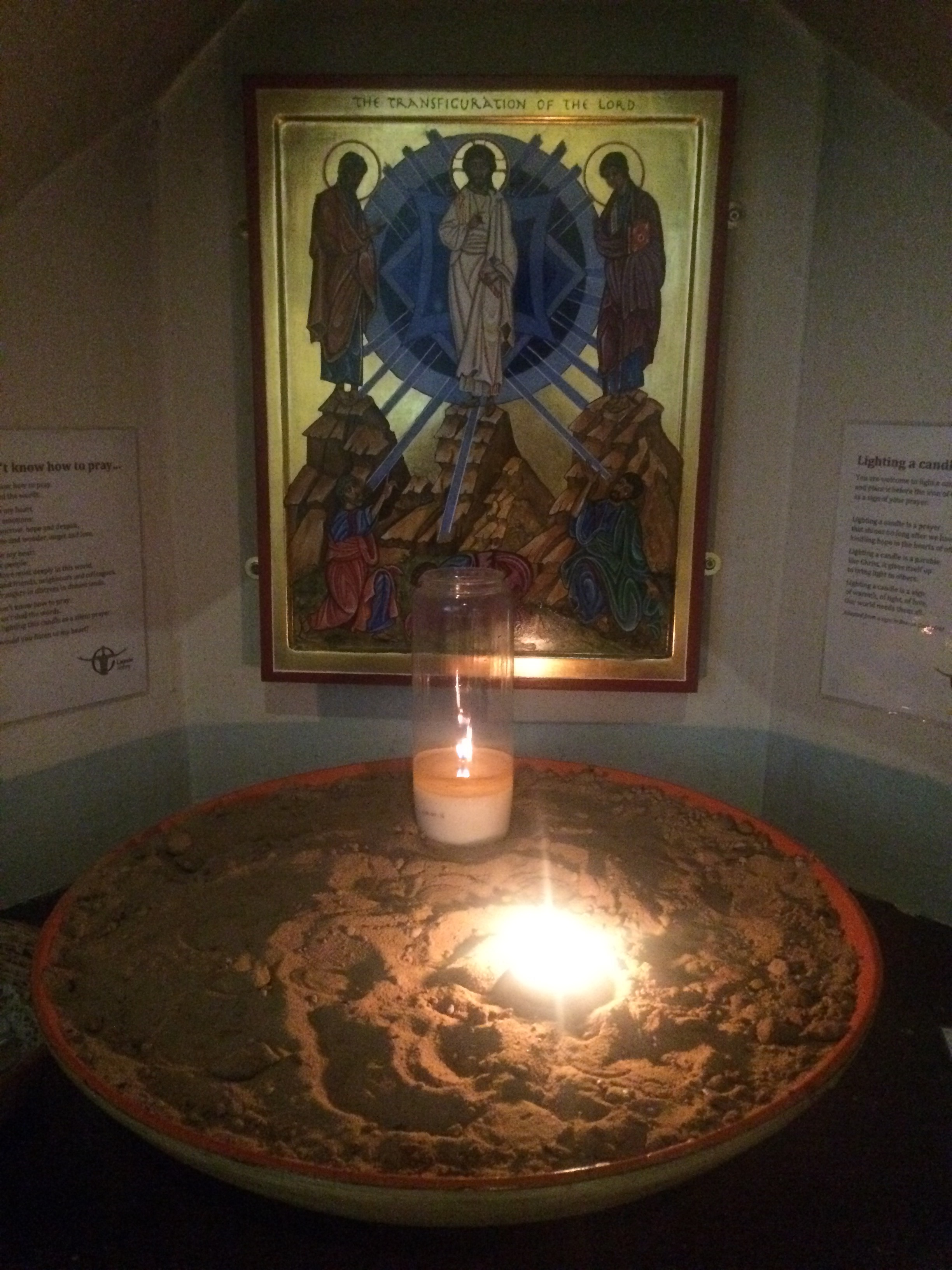
Jesus, from the darkness of the womb of Mary, is the light that conquers death in the darkness of his slaughter on the cross. Death is conquered in the conception of Christ, his life, death and resurrection. It is finished; the mystery from the beginning is revealed and we walk free in victory, saved from sin and the consequences of sin, so that in the midst of this realm of darkness the light of the Lord shines.
Here I am.
And the Word became flesh and dwelt among us, and we have seen his glory, glory as of the only Son from the Father, full of grace and truth. http://esv.to/John1.14
Fully human, fully God, the exact image of the Father, Jesus reveals the Father. And he is grace and truth. Grace and truth, kindness beyond measure, this is our God, self giving, glorifying himself in humbling himself for us. The light shines in the darkness, dawning in our hearts, a mighty presence. Light and life found in the new born Son, fragile, vulnerable, easily snuffed out. The Creator becomes a creature so that the mystery from the beginning is revealed; we are loved and treasured and he takes upon himself our sin and faces evil for us. In him we know forgiveness and can rest secure, cradled in his love. This is love lying in a manger.